

By Sue Granzella
Canvassing is not comfortable.
A few people frown and point to their “No Soliciting” sign, though the Supreme Court has affirmed that political canvassing is protected under the First Amendment and is not “soliciting.” I am a woman and was raised Catholic, both of which have conditioned me to feel like I’m bothering people when I knock. It’s not fun having a large man sneer at me and say, “The problem with our country is that there are too many DEMOCRATS running things!” (It’s also confusing. Where are these powerful Democrats, and why are they hiding? But I digress…)
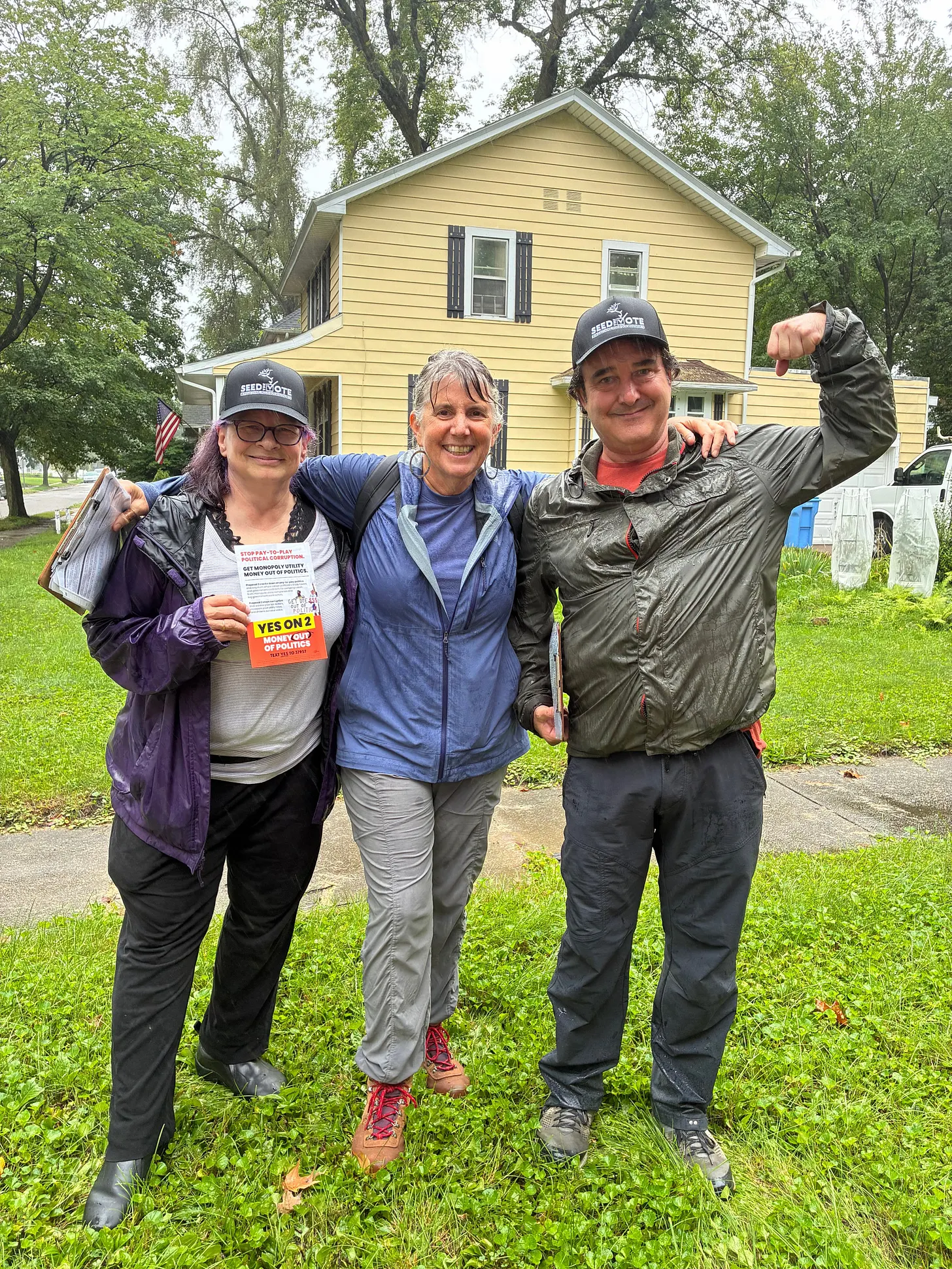
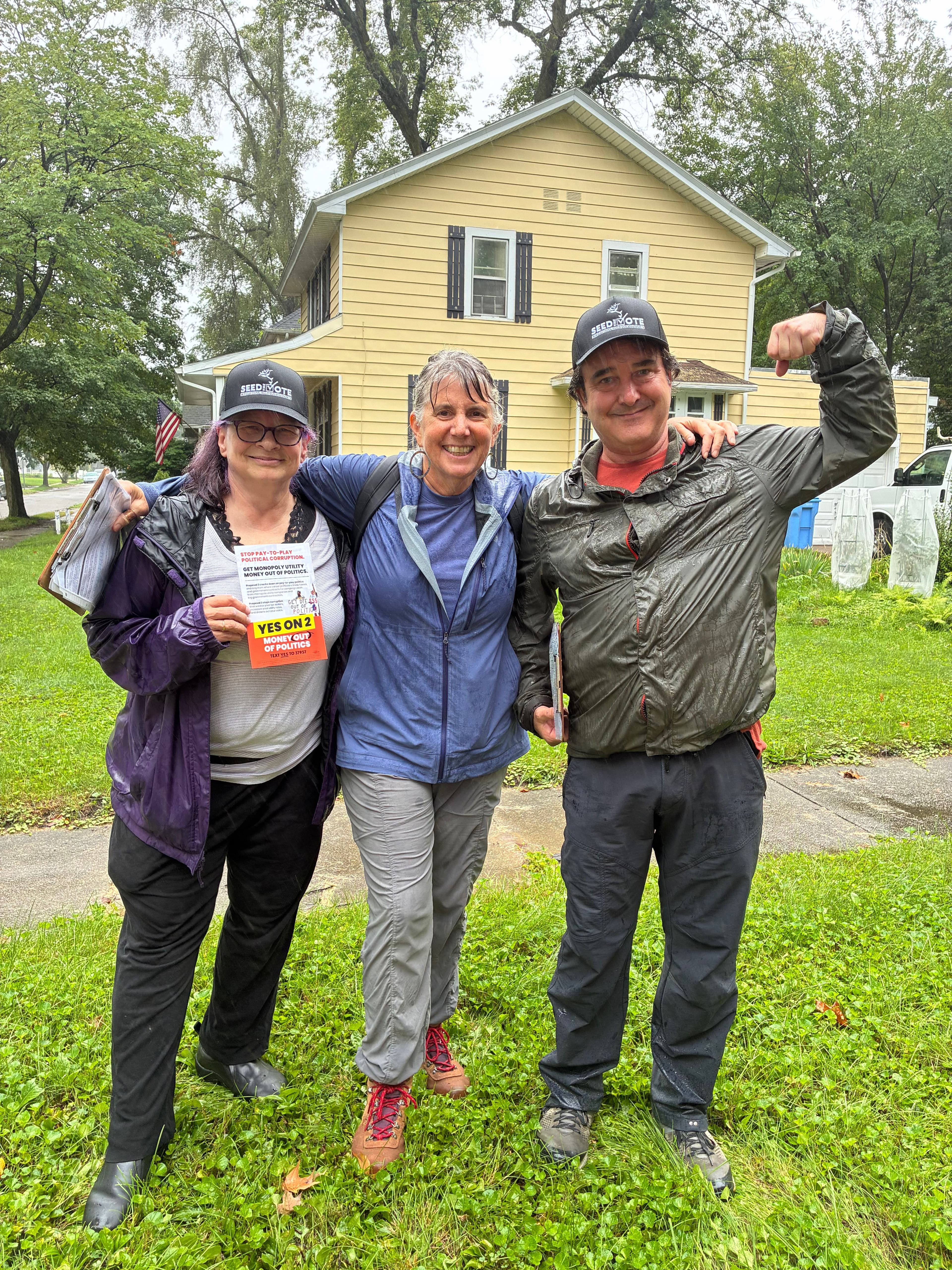
When I canvassed in Arizona in 2024, the daily 108-degree heat was so hard on me that I feared I might die if I returned for the midterms. When I canvassed for Prop 50 (redistricting California) in Bakersfield with Seed the Vote, there were so many wildly aggressive dogs that “dealing with dogs” became an agenda item for our morning launch. In Michigan, while knocking doors recently for Abdul El-Sayed and Will Lawrence, we sloshed through two straight days of steady rain. (I think it made people more receptive. They pitied our soggy selves.)
But DAMN the discomfort, because canvassing is one of the most inspiring and hopeful things I’ve done during these recent years of culture wars. Community and connection feed my soul, and canvassing immerses me in a wealth of each.
Here are a few vignettes from my recent one-week stint in Michigan.
From two houses away, I saw a teenager slogging through the rain back and forth between a van and the open door of his house. A few minutes later, I stepped onto his sagging porch and knocked.
When he answered, I introduced myself and asked for the woman on my list. He smiled.
“Yes, of course. Just a minute, please. I’ll get my mother.” He left.
So polite!
I don’t know, I heard him telling someone. She just asked if she could speak to you. Then a woman appeared.
I complimented her on her courteous son, and she smiled proudly.
“I have two babies, too.” Then this single mom told me about her life.
The older baby, 21 months old, is in end-stage kidney failure, due to a rare hereditary condition. He’s on dialysis.
“He recently had to spend three months in the hospital,” she said. “I stayed there with him.”
While with her baby in the hospital, she couldn’t go through her mail consistently. Once the baby was discharged, she learned that her application for low-income housing had been selected. But she’d missed the deadline to respond.
“I told them, ‘But I was in the hospital! With my BABY!’ They just told me to reapply once the window opened up again. I have to care for my baby 24/7, so I can’t work. I can’t afford this rent. Some people collected donations for me. See that van? Some church people just gave that to me two weeks ago. I didn’t have a car when he was in the hospital.”
Then the kicker:
“My ten-month-old was just diagnosed with the same kidney condition.”
My GOD. I felt like sinking to the rotting front steps.
I told her about Will Lawrence’s commitment to affordable housing, and his push for universal health care. She’d never heard of him. I asked if her baby could eventually get a kidney transplant.
“Yes, but not for a long time. He hasn’t had any of his vaccines, and after he’s had a transplant, he can’t get vaccinated. So we’re just about to start the vaccines now.”
Inside, I cursed RFK Jr. for thinking he knows more about vaccines than scientists and this woman do.
After she promised she’d vote for both Lawrence and El-Sayed, it was time. When I told her I wouldn’t forget her family, she brightened and asked, “Would you like to see my youngest baby?”
She plucked him from the couch, and presented little Mason, who had no clue how sick he would become. He waved his chubby fists, his dark eyes bright beneath his little fluff of black curls. His mother glowed as if nothing were wrong. Just a mom, nuzzling her baby.
I was in a large rundown apartment building, and the app told me there were FOUR voters inside the small unit, ages 92, 80, 72, and 37. A short slight man answered my knock (the 92-year-old), and once I said the word “vote,” he said, “Let me go get the others.”
He returned with a tiny woman (72) and a tall man who kept nodding (80), fretting that the 37-year-old wasn’t home. They crammed into the narrow entryway, lined up one behind the other like bowling pins with the tiny woman as the headpin. She wore a bathrobe and slippers and a satiny hair cap, and never once broke eye contact with me.
“Are you planning to vote?” I asked.
“Of COURSE we’re voting!” said the woman. I asked about their voting plan, and the 80-year-old said, “I like to vote in person on Election Day. I know they’re telling us to vote early because of Trump, but when you’re my age, you got to SOCIALIZE, and I like SOCIALIZING with other voters.”
The woman said, “But my husband and I, we vote here at home, and then I take both ballots and drop them off TOGETHER. That’s the way we always do it.”
I asked if they’d heard of Will Lawrence, and again, all three nodded. “Oh, yes,” said the woman. “Bernie Sanders came to endorse him. And we all love Bernie. He’s for the PEOPLE!” All three nodded, as Ronald (80) stepped out of line and began circling the small living room. I called out, “Hey, Ronald, are you following this?” He waved agreement. I laughed at the repeated reverential whispers of “Bernie.”
When I asked their thoughts on Abdul El-Sayed, the woman burst out with, “Where do I SIGN?!” I laughed again as all three voters nodded their intent to vote for El-Sayed and shook their heads in disgust as they muttered about Trump and his cronies. Ronald kept pacing, still listening.
I wished I could’ve stayed to hang out with them, but myriad doors awaited. So I thanked them for their time, and they thanked me. We cheered each other on before the door closed.
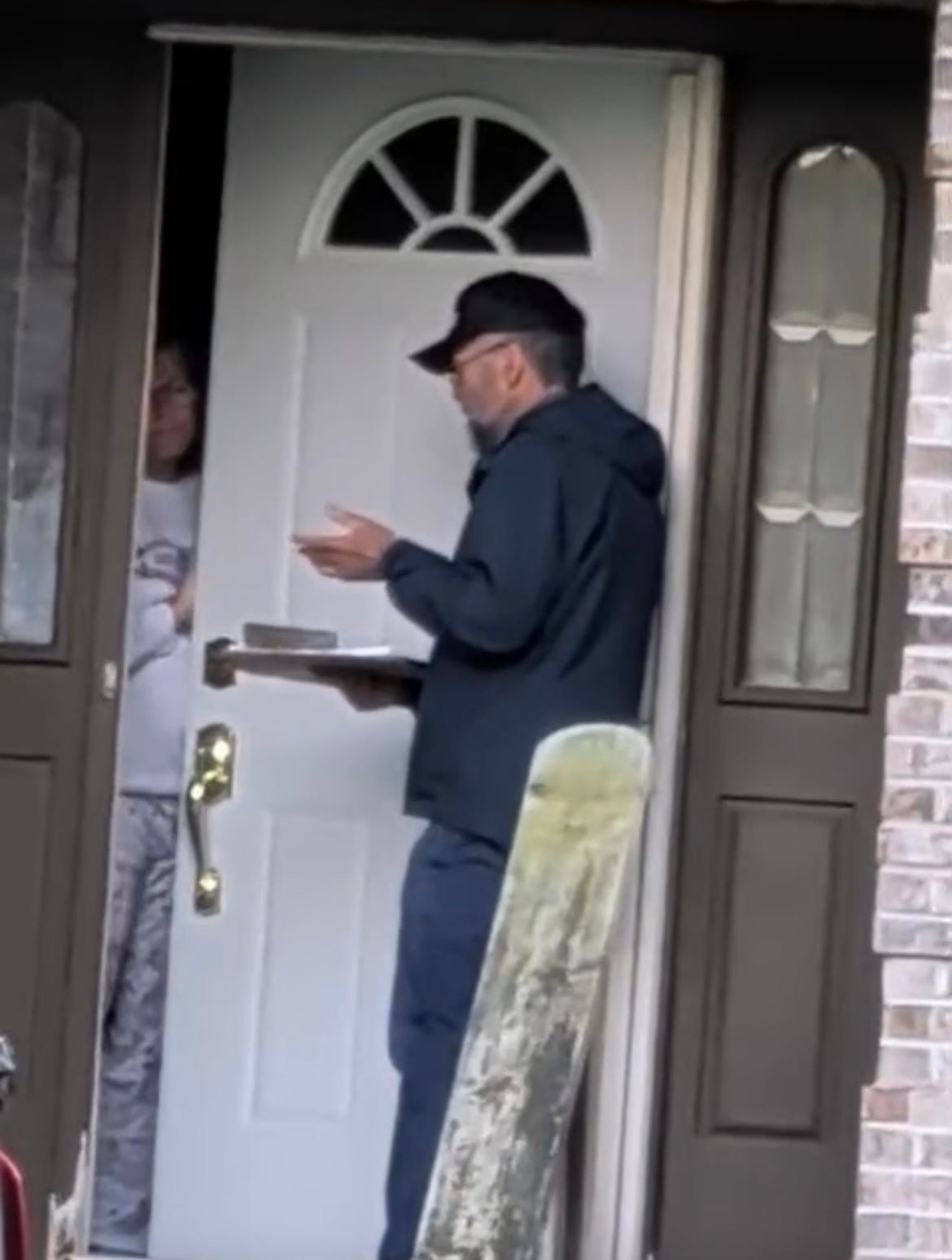
No one answered when I knocked. As I stepped off the porch, a burly man appeared in the driveway.
“What do you want?” He wasn’t smiling.
I told him who I was looking for, and he said, “That’s my wife. Are you Democrat? I’m Republican, and she votes exactly like I do.”
I didn’t tell him that controlling-type men often say that; I simply thanked him, and headed next door, where an 80-year-old man sat inside near his open front door/closed storm door. Through the glass, I saw that his leg was injured, so I told him not to get up, and asked if we could talk about voting. He nodded, and I began shouting through the glass door.
Suddenly, the burly neighbor was a few feet away. He had followed me.
“You can’t talk to him! See the ‘No Soliciting’ sign? And he’s Republican! You need to leave! I’ll call the cops!”
Maybe because I’d just read up on the legality of canvassing despite “No Soliciting” signs, I was more mad than nervous. The old man’s main door was open; clearly, he craved being closer to the world outside. I simply said, “If he wants me to leave, he can tell me.” I turned back toward the elderly man.
“And he doesn’t have the MENTAL CAPACITY to vote! You can’t talk to him about that!”
I reiterated my message to Mr. Burly, and as he stormed off, I asked the old man if he preferred that I leave. He could barely hear me, so after a few more tries, I waved at him through the storm door and left. But I ached on his behalf, hoping that he hadn’t heard what his loud neighbor had said about his mind.
The next day, another stocky white man answered a different door. But this one wore a rainbow tie-dye t-shirt with “Summer of Love” and a picture of a Volkswagen bus across the chest. With his prominent belly and long white beard, he was Hippie Santa.
When I asked about his biggest concern these days, he spoke deliberately.
“The shameful way we are treating our most vulnerable people.”
His use of “vulnerable” and the contrast with Mr. Burly of the day before did me in. I choked up, telling him he was the first person who’d answered that question by expressing concern for others.
“It’s because we’re hurting everyone – women, brown people, immigrants, homeless people, LGBTQ people, kids, poor people. Anyone who’s not a well-off, straight-cis white man.”
He was already planning to vote for our two candidates, so I didn’t stay long. But the warmth of his empathy stayed with me all day.
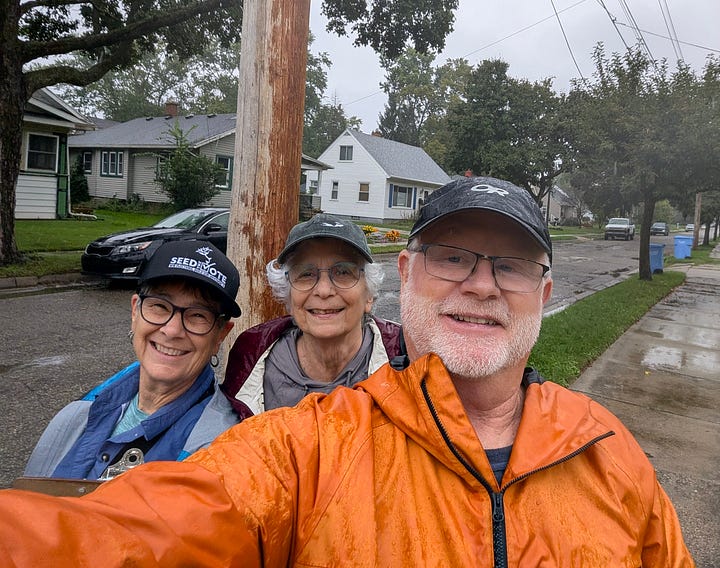
I remember the woman with two teenage daughters. She’d been injured on the job in January, and her SNAP (food stamps) had been cut off two months later. “Now we eat from food banks and churches,” she said. “I don’t know when I can work again. I don’t have money for food.”
I remember the non-binary young adult who told me that, as an anarchist, they don’t relate much to politicians. Then they began talking about the people of Palestine, and the despair over having their tax dollars fund the genocide. Standing in the rain, they sobbed.
I remember the 89-year-old woman who said that our two candidates were not good people. I asked why she thought that, and she said, “Well, I can’t remember exactly, but those commercials on TV say they’re pretty bad.” So I told her about Lawrence’s work for affordable housing. I told her that both candidates’ platforms call for health insurance for all, and that both refuse to accept corporate money. After we’d talked for a good while, I asked her what she thought about our two candidates.
“Well!” she laughed. “I guess you could say I’ve changed my mind!”
I remember the woman whose bad back prevented her from getting out of bed; she talked with me at length through her Ring camera. The man in his 60s who cares for his mother who has cancer. The brilliant 38-year-old who never expected to be living on a low fixed income, trapped in his home by multiple neurological conditions. The knowledgeable woman who fired F-bombs toward Democrats at an astonishing rate but acknowledged that the war is bad and utilities cost too much. The man exhausted from a 10-hour workday, sitting on his front steps at dusk; he hadn’t voted in years, but wanted to take his 18-year-old with him to vote this time because he wanted her to know how important it is.
He’s right.
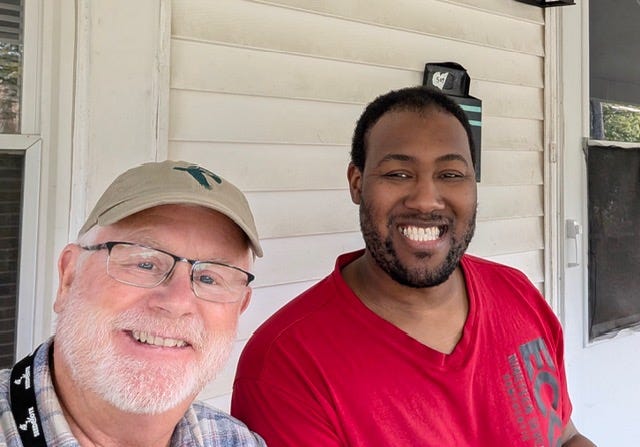
The young Latinx woman answered the door with her 2nd-grade daughter and her 4th-grade son. She wasn’t on my list, but I asked if she was registered to vote.
“Oh, I don’t vote,” she said. “I don’t follow politics. I won’t vote.” She wouldn’t say why.
Around and around we went, my gently-probing questions aimed at finding her truth. Finally, she voiced it.
“I don’t understand it. I don’t know what everything on the ballot means. I don’t know enough.”
The prospect of voting made her feel dumb. The teacher in me caught fire.
I threw every argument at her that I could think of. I said it’s okay not to vote for everything on the ballot. I told her that for years, I only voted for a few items, and that many people do that, too.
“NO one understands all of it,” I said.
I told her that there are too many old white men running our government, and that we need the voices of EVERYONE to elect candidates. I told her how the morning after Trump was elected in 2016, some of my third-grade students from immigrant families were in tears, terrified of Trump’s proposed wall. I said I hoped those kids, now old enough to vote, would use their vote to build a better world. Voting is not just for educated white people, I said. I told her she has a right to vote. She matters. Her voice matters.
Her face slowly brightened. I opened up the website to show her how easy it is to register online; she didn’t have the required documentation with her, so she couldn’t do it right then.
“But can I message you when I have the ballot,” she said, “and maybe you can help me understand?”
I teared up right now just typing those words.

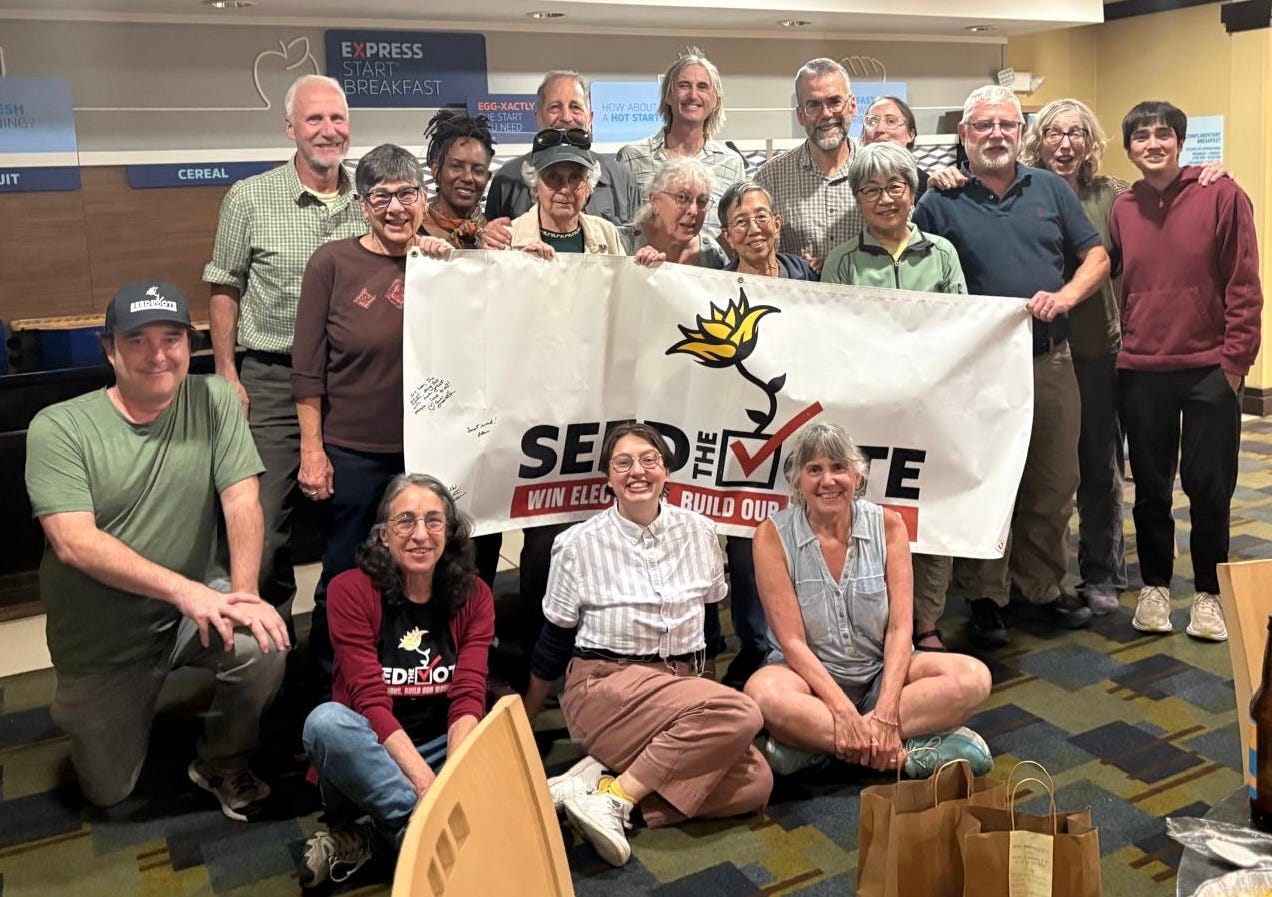
My canvassing comrades included:
· a veteran committed to fighting fascism in his own country;
· an ER nurse from a county hospital;
· someone who just left decades of working in corporate America—he sold his home and is devoting the rest of his life to fighting fascism full time;
· a community doctor from north-central Washington;
· a retired Forest Service worker; and
· so many others whose stories I’ll never learn.
During the debrief on my last night in Michigan, a Black canvasser said, “When I get to a door and the person is Black, if they say they’re not interested much in voting, I say, ‘Listen. Some of our people died so we could vote.’ The conversation gets real in a hurry.”
As a white person, I can never know that level of connection. But another Black canvasser nodded. She knew.
“I tell them my story,” she said. “And then they open up about their lives.”
Because that’s what canvassing is. At its best, canvassing provides a moment in time for connecting, human to human, and talking about things that matter.
We don’t always agree. Sometimes doors are slammed, and curses are heard. Canvassers get rained on, sunburned, discouraged, and weary.
But I’ll always believe that we are born to connect, and those moments of connection transform the discomfort of canvassing into the wonder and magic of hope.
It’s a price I’m willing to pay. Discomfort, be damned!
I’ll do almost anything for hope.
—
This post was originally published at the author’s Substack and is repreinted with permission. Please see her other work here.